A slab that's cracked, sunken, or simply sitting where you want something better.
Concrete removal is the half of the job nobody pictures, and it's the half that surprises people. A driveway patched four times over. A back patio behind a house in Creekbridge that finally gave up. A shop floor off Abbott Street that has to come out on a weekend so nobody loses a workday.
What separates one concrete demolition job from the next is usually hidden: wire mesh, rebar, eight inches where you expected four, an irrigation line running under the middle of it. So I look first. Nobody swings a breaker here until I know what's beneath that slab, and the broken pieces leave on our truck instead of sitting at the curb for your neighbors to admire.
Further down: how the tear-out actually runs, what pushes the price up or down, when removal is the wrong fix, and the questions people ask concrete removal contractors before booking. Call me at (831) 539-2803 and I'll come take a look.
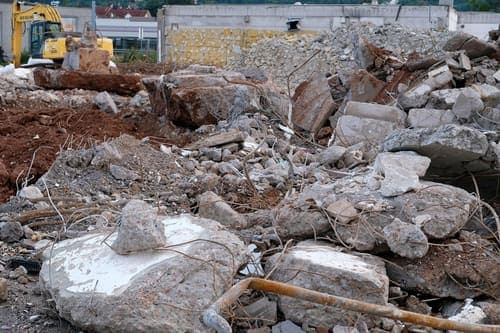
What the job involves
First a walk round to find what we should not hit: irrigation lines, the sewer lateral, gas, the sprinkler valve box somebody buried under the edge of the patio. Then we saw cut the line where the demolition stops, so the concrete that stays has a clean square edge to pour against later.
From there it is breaking, loading and hauling. On small residential jobs that is a breaker and a skid steer. On a commercial floor it is bigger equipment and usually a night or a weekend so the business keeps running.
Most driveway or patio tear-outs are a single day, sometimes two if the slab is thick or access is tight enough that everything moves by wheelbarrow. If we are pouring back, we grade and compact the base the same visit so the site is ready rather than sitting open through a rainstorm.
What it costs
Straight answer first: concrete removal is priced on square footage, thickness, whether there is steel in it, and how far the material has to travel to the truck. Labor is roughly $45 an hour on the crew, and disposal is the other half, because you are paying by weight at the far end.
A four inch patio slab with a clear path to the driveway is the cheap version. The same square footage at six inches with rebar through it, behind a gate, forty yards from where the truck can park, can be double. Adding a saw cut so the neighboring slab survives is cheap and almost always worth it.
If we are pouring back afterwards, the removal usually costs you less than it would on its own, because the crew and the equipment are already there.
Call us at (831) 539-2803 and we'll measure the area and tell you what is under it.
When concrete removal is the wrong fix
Sometimes concrete removal is the wrong fix, and hearing that now beats hearing it after a debris bin is parked out front.
If your concrete patio is only spalled or crazed on top and the slab still rings solid when you knock on it, grinding and an overlay gets you a good surface without demolition. Same story with concrete paving where the panels are sound and it's the joints that let go.
A slab poured tight against a concrete foundation is another one. Breaking all of that out with heavy equipment can shake a footing, so we saw cut and lift only the bad bay.
A leaning concrete retaining wall is usually a water problem wearing a concrete costume, and hauling it off without fixing the drainage buys you the same wall twice.
On commercial concrete lots, we pull the failed panels and leave the rest. Paying to haul off good concrete is money for nothing.
Why choose us for this
You want the concrete removal done once, the slab gone, and no reason to think about that patch of your property again for years. Fair enough.
So the figure I give you holds. If we break into a driveway and find it's half again as thick as the edge suggested, or there's an old footing hiding under it, you hear that from me while the machine is still sitting there, not later on paper. A cheap concrete demolition quote often leaves hauling and dump fees off the sheet, and that is the part that shows up after the fact.
We saw cut the perimeter before anything gets broken out, because ripping a slab away from a neighbor's walk or a public sidewalk leaves a ragged edge and somebody else's repair to pay for.
Coming out to look and pricing the concrete removal service costs you nothing, and you are not booked because I stood in your yard.
Frequently asked questions
How long does concrete removal take?
Most residential driveways and patios come out in a day. Two if the slab is thick, has heavy steel in it, or sits behind a gate narrow enough that every piece moves by wheelbarrow. Commercial floors we usually stage overnight or over a weekend.
Will it damage my sidewalk or gutter?
Not if it is saw cut first, which is why we do it. The sidewalk and the gutter apron belong to the city, and if they get broken during a private tear-out, replacing them lands on you. A clean cut costs a fraction of that.
What happens to the old concrete?
It goes to a recycler where the load allows, and gets crushed back into aggregate base. That is cheaper than landfill and it is the same material that ends up under the next slab.
Can you take out just part of a slab?
Yes, and it is common. We cut the line, take the failed section, and leave a square edge to pour against. The join will always be visible, so if the look matters more than the money, replacing the whole slab is the honest recommendation.
Do I need a permit?
For a private patio or driveway on your own property, usually not. If the work touches the sidewalk, the curb, or the driveway approach in the public right of way, the city has a say. We handle that paperwork and will tell you up front which side of the line you are on.
How do we get started?
Call me at (831) 539-2803. I come out, measure it, tell you what is in it, and put a number in writing at no cost.
Contact Salinas Concrete Company now
If you are looking for a concrete demolition company around Salinas, that is what we do, and the quickest way to get moving is a call to (831) 539-2803.
When you ring, tell me roughly how big the slab is, how thick you think it runs, and whether a truck can back within a few feet of it. Access shifts the schedule more than square footage does. Wheeling broken concrete through a side gate by barrow eats a half day that a bin parked on the driveway would have saved. Rebar or mesh in the pour, a sewer line running under it, and whatever gets built on top afterward all change how we sequence the tear-out.
We answer nine to five on weekdays, and messages get called back. Plenty of concrete removal contractors will price off a photo. I would rather put boots on it.