A patio slab dropped at one corner, or a driveway splitting along a line nobody ever cut.
Ask around Old Town long enough and somebody will tell you about a driveway that came apart before the Rodeo crowd had gone home. Same story every time: soft ground, no rock under it, and the rebar still riding in the back of the truck.
That is not how we pour. We are a small concrete company doing flatwork, slabs, concrete footings and the odd concrete patio for houses and shops around town.
If you are weighing up concrete companies, ask to see the base and the steel before the mud shows up. That is where a concrete contractor wins or loses the job, and I will stand in the trench and point at it with you.
Keep reading for how the work goes, what moves the price and where we pour. Or ring me at (831) 539-2803 and I will come look.
Glass Reinforced Concrete
Glass reinforced concrete is how you get the look of cut stone without the weight of it. GRC panels run around half an inch to three quarters of an inch thick, sprayed or premixed with alkali-resistant fiber over a steel stud frame, so a column wrap, a planter or a fireplace surround goes up with two people instead of a crane and a bad back.
The fiber is the whole ballgame. Cheap E-glass gets chewed up by the alkali in cement and the panel turns brittle a few years in, which is a failure nobody spots until a corner snaps off in your hand. We use AR fiber, every time.
Curing is the other half, and it is the part people ask Salinas Concrete Contractors about least. That valley wind pulls water out of a green panel fast, so ours stay damp and covered a full week before any concrete sealing touches them.
Polished Concrete Floors
Polished floors aren't paint and they aren't a coating. We're grinding the slab itself, starting with metal-bond diamonds around 30 grit, cutting through the cream, then stepping up through resin pads to 400, 800, 1500 and higher depending on the shine you want. Somewhere in the middle a lithium densifier goes down, which is what makes the surface hard enough to stay glossy under forklift traffic in a packing shed or foot traffic in an Old Town shop.
Skip grits to save a day and you get swirl marks that only show up once the lights go on. Then it's too late.
What moves the number on polished concrete floors is exposure level, how flat the slab already is, and whether we're chasing off old tile mastic first. Salinas Concrete Contractors do this work in shops, garages and tasting rooms alike.
Concrete Forming
Forms are the part nobody photographs and the part that decides everything. The concrete just goes where the wood tells it to go.
We snap lines, set 2x lumber or bender board for curves, and stake and brace every couple of feet, because wet mud pushes hard and a form that bellies out in the middle gives you a wavy edge you'll stare at for twenty years. Grade matters more than looks. We shoot the slope with a laser so water runs to the street and not toward your slab door when a February storm parks over the valley for three days.
Bad concrete forming shows up as ponding, cracked edges and a patio that drains backward. Good forming is invisible.
Set, poured, stripped the next day, that's the rhythm my crew at Salinas Concrete Contractors works to.
Concrete Pumping
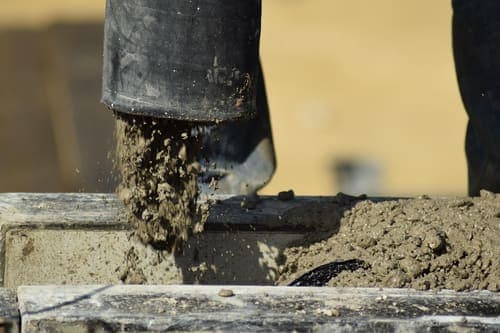
When the truck can't reach the pour, the pour has to come to the truck. A line pump pushes mix through a two or three inch hose, so we can run it 150 feet down a narrow side yard, over a fence, past the pool, and drop it right in the forms. You can move it by wheelbarrow instead, if you enjoy suffering and have a whole Saturday free.
Concrete pumping earns its keep on backyard slabs, on concrete footings under an addition, and anywhere a ten wheel mixer would chew up your lawn or crack the curb strip out front. Timing is the whole game. Once mix is in that hose it keeps moving or it sets up inside, so the pump and the finish crew show up together, not an hour apart. Most residential pours my Salinas Concrete Contractors crew pumps run two to four hours, setup to washout.
Concrete Boom Pump
A boom pump is the truck with the folding arm, and it earns its keep the day your pour is somewhere a chute will never reach. Backyard behind an older place off Alisal with a five foot side gate? The boom goes over the roof and lays the mud right where the crew is standing. Same story for concrete footings on a sloped lot up toward Highway 68.
Setup is the part people don't watch. We crib every outrigger, especially after a wet January when the lawn is soft, because a leg that punches through your walk turns a good pour into a repair. Mix matters too. A load that's too stiff plugs the line, and pulling hose apart while your slab is setting is nobody's idea of a Tuesday.
Reach, yardage and standby time are what move the day for our Salinas Concrete Contractors crew.
Concrete Flooring
Interior floors are the ones people actually live on, so the prep matters more than the finish. On new work I want a 10 to 15 mil vapor barrier under the slab and clean, compacted base beneath that, because moisture pushing up through concrete flooring will peel a coating off in sheets by the second winter. Our marine layer does not help. On an existing slab I grind it flat, open the pores, patch the spalls and check for moisture before anything goes down, and if the slab is sweating I will say so instead of coating it anyway.
Cure and coating schedules stretch the job past a weekend, usually three to five days with cure time between passes.
Slab prep is the least glamorous thing Salinas Concrete Contractors do, and it decides everything.
Leveling Concrete Floor
Leveling a concrete floor inside the house is a fussier job than picking up a sunken walkway. Half an inch of dip across one room is enough to click luxury vinyl apart at the seams and enough to make a fridge door swing itself shut.
We map the slab with a laser first, then decide what it actually needs. High spots get ground down. Low spots get a cementitious self-leveling underlayment that flows out flat and is walkable a few hours later. If the whole slab has dropped because the ground under it moved, that's concrete jacking with polyurethane foam, and nothing goes down over it until it has stopped moving.
We moisture-test before anything gets glued. Skip that and your new concrete flooring traps vapor under the adhesive until it turns loose. On interior concrete leveling, the room size, the amount of fall and whether cabinets have to come out are what move the price.
Concrete Footings
Footings are the part nobody ever sees and everybody pays for twice when they're wrong. Around here that usually means digging through Salinas Valley clay that swells in a wet February and shrinks tight by August, so depth and width matter more than the pretty stuff on top. Most residential footings run at least 12 inches below undisturbed grade, wider under a bearing wall, with rebar tied continuous through the corners and a set of anchor bolts or holdowns placed before the mud goes off. Pour on loose backfill and you'll watch the addition tell on itself: hairline stair steps in the stucco, a door that won't latch by spring.
We dig, we compact, we call for inspection, then we pour. Skipping the middle two is how Salinas Concrete Contractors earn a callback nobody wants.
Concrete Jacking
Slab jacking, or mudjacking, lifts a sunken slab back to where it started by drilling small holes and pumping grout underneath until it rises. Polyurethane foam does the same job with a lighter material and smaller holes.
It is the right answer more often than people expect, because it costs a fraction of replacement and takes hours rather than days. A sunken walkway panel, a garage apron that has dropped and left a lip you catch the car on, a patio slab that has settled toward the house: all good candidates, as long as the concrete itself is sound.
What it cannot fix is a broken slab. If the panel is cracked into several pieces, lifting it just raises a jigsaw. And it does not address why the void formed. Where the cause is water washing out the base, we deal with the drainage as well, or the slab will sink again.
You can usually use the surface the same day.
Concrete Sealing
Sealing is the cheapest thing you can do to concrete and the one that most reliably gets skipped.
A penetrating sealer soaks in and works from within, repelling water and oil without changing the look. It cannot peel because there is nothing on the surface to peel, and it is what I would put on most driveways and walkways. A film-forming sealer sits on top, deepens the color, and gives the wet look that suits stamped and decorative work, at the cost of needing recoating and of being slippery when wet unless grit goes into it.
What sealing actually buys you is time. Water that cannot get into the surface cannot carry salt in, cannot freeze in the pores, and cannot start the spalling that turns a good slab into a flaking one.
New concrete waits about a month. After that, most surfaces here want it again every two to three years, and stamped work sooner because the sealer is doing the color a favor too.
Concrete Acid Stain
Acid stain is a chemical reaction rather than a coating. Metallic salts in an acidic solution react with the free lime in the concrete and deposit color inside the surface, which is why it will not peel, flake or wear off the way paint does.
What you get is mottled and variegated, closer to leather or weathered stone than to a flat color. That unpredictability is the appeal and also the thing to understand before committing: no two slabs take it identically, and the same stain on your patio and your neighbor's will not match.
The palette is genuinely limited, because it depends on what the concrete has to react with. Browns, tans, terracottas and soft greens are what acid stain does well. Bright or pastel colors are a water-based dye job, not an acid stain.
Prep decides everything. Old sealer, oil, glue residue or a hard trowelled surface all block the reaction. We always test an out-of-the-way patch first.
Concrete Lifting
Concrete lifting is how we save a slab that has dropped instead of hauling it to the dump. We drill a few penny-sized holes through the slab, pump structural foam into the void underneath until the panel floats back up to grade, then patch the holes flush. A sunken walkway or a garage apron is usually a couple of hours of work, and you can park on it that afternoon.
Size, how far it sank, how deep the void runs and whether we can get a hose to the work are what move the price.
Reinforced concrete comes up in one piece. A thin patio already broken into five chunks will keep breaking, and lifting rubble only gets you level rubble. When that is what we find under the slab, we say so and price a fresh pour instead.
What the job involves
Here's the order it actually happens in. We lay out the pour, cut the grade, and get the subbase compacted, because our valley adobe moves when it takes on winter water and a slab set on soft ground cracks no matter how good the mix is. Then base rock, forms, rebar or mesh up on chairs where it belongs, and a 3,000 to 4,000 psi mix depending on what the slab has to carry. Pour day is early, before the fog burns off and that afternoon wind starts pulling water out of the surface and crazing the top.
Control joints get cut within about a day, spaced roughly every ten to twelve feet, a quarter of the slab depth. Skip that and the concrete picks its own cracks.
Most flatwork runs two to three days on site.
What it costs
Here's the honest math. Ready-mix runs about $100 to $150 a cubic yard delivered around here, and labor lands near $45 an hour, or roughly $2.50 a square foot on a straightforward pour. Stripping forms, cleaning up and stacking the lumber adds another $0.30 to $0.60 a foot, which is why concrete forming shows up as its own line instead of hiding inside the slab number. Most residential work we do, a patio, a walkway, a driveway apron, lands between $2,650 and $4,700.
What moves it is thickness, tearing out an old slab, rebar versus mesh, how close the truck can get on a narrow street off Alisal, and whether you want concrete sealing on top.
Call me at (831) 539-2803 and I'll measure yours. Salinas Concrete Contractors who quote off a phone photo are guessing, and that number always changes on pour day.
When concrete is the wrong fix
There are jobs where concrete is the wrong fix, and I would rather say that out loud than sell you a pour you don't need. If a slab is sound and just stained, spidered and tired looking, skip the concrete removal and put a concrete overlay on it instead, ground, bonded and finished over what you already own. If one corner of a concrete patio has settled but the slab itself is still in one piece, lifting it back to level costs you less grief than breaking it up. Cracked concrete steps with a crumbling nose can often be rebuilt in place. And where water pools against the house every rainy month, a fresh pad just gives it somewhere flatter to sit, so grading, a drain line or permeable concrete comes first. Real movement in a concrete foundation is structural work, and it gets sorted before anyone pours anything on top of it.
Why choose us for this
You've got concrete that's cracked, sunk, or tired enough that you've quit looking at it on the way to the car, and what you're after is simple: hire somebody once, don't supervise them, don't think about it again for years.
That's why I price off what's under the slab, not off a hunch over the phone. Size, truck access, how deep we're digging, how much steel a reinforced concrete pour needs, and how soaked the ground is in the rainy months all move the figure. If we open it up and find something I didn't expect, you hear it before the pouring starts, not on the invoice.
There are cheaper concrete workers in this county. The gap is usually base prep and steel, invisible on the day and decisive by year three.
An estimate is free, and nothing obligates you to book.
Frequently asked questions
How do I find a reliable concrete contractor?
Ask to see a slab we poured three or four winters ago, not a fresh one. Anybody's concrete looks good on day one. Check that whoever you hire carries general liability and workers' comp, and holds a current license. Call us and we'll give you the number.
How long before I can walk or drive on it?
Foot traffic at 24 to 48 hours, cars at seven days, and a loaded truck I'd rather you kept off for 28. Concrete keeps gaining strength for a month. Rushing it is how you get hairline cracks by spring.
How do we get started?
Call Salinas Concrete Contractors at (831) 539-2803 and we'll walk the site with you, measure, and talk through subgrade, thickness and whether concrete sealing makes sense once it cures.
Contact Salinas Concrete Company now
If you're shopping for a Salinas concrete company now, tell me what's actually in front of you: a slab that's dropped at one end, concrete piers under a sagging deck, edging crumbling along the flower beds. Call (831) 539-2803 and we'll get out there to look at it. What helps most on that first call is rough dimensions, how close a mixer can park, and whether anything's buried under the pour. Concrete cutting into a slab with a gas line under it is nobody's idea of a good morning.
Somebody's here weekdays, nine to five, and messages get returned the same working day. We hold a current license, we're bonded and insured, and the certificate is yours on request.
Fog sits over town most mornings, so we schedule pours early and finish when the slab's ready.