Nobody has ever pulled onto Main Street and said, look at that gorgeous curb. That's the whole point. A curb only gets noticed when it's spalling, ponding water by the storm drain, or a produce truck has clipped the corner off it for the third time this season.
That quiet, unglamorous work is most of what we do at Salinas Concrete Contractors. Curbs, gutter curb, mow curb around the planters, ADA compliant curb ramps at the lot entrance, concrete curbing for driveways from Alisal to Harden Ranch.
Here's what you get from my crew: we show up when we said we would, we answer the phone ourselves, we explain the concrete curb forming before we cut anything, and we haul off our own washout instead of rinsing it into your gutter.
Below I'll walk you through how the work goes, what moves the price, and the questions folks ask before they book. Call me at (831) 539-2803 and I'll come look.
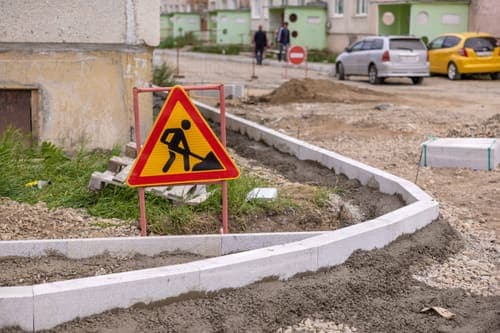
Gutter Curb
A gutter curb is the one that has to actually work. The curb face holds the edge, the flat gutter pan carries water to the inlet, and the whole thing lives or dies on the flow line. Get that wrong by a quarter inch over twenty feet and you get standing water, mosquitoes, and a green stripe of algae by February when the rain comes off the Gabilans and everything in the valley drains at once.
So we shoot grades before we set a single form, and we check the pan with water, not just a level. Birdbaths in a concrete curb gutter are the number one callback in this trade, and the fix is saw and repour, not patch.
Most gutter curbing runs alongside a lot or a private street, which is exactly the work Salinas Concrete Contractors gets called out for most.
Concrete Curb Installation
Installation starts underground, in the part nobody ever photographs. We pull a string line, cut the subgrade to grade, and compact base rock before a single form goes down. Concrete curbs set on soft dirt hairline first and break clean the day a delivery truck clips the corner.
Long straight runs we can machine-pour as extruded curb. Tight radii, transitions and anything tying into existing flatwork get hand-set forms. At Salinas Concrete Contractors we keep both on the truck, so the shape of your lot picks the method instead of whatever is easier for us. Either way you get tooled edges and joints cut at regular spacing, so the curbing cracks where we told it to.
Most residential concrete curb installation is a one-day pour. In an August heat spell we start early and keep it damp, then you stay off it a week.
ADA Compliant Curb Ramps
A ramp that misses by half a degree is still a ramp that gets torn out. ADA compliant curb ramps live and die on numbers: 1:12 maximum running slope, 2 percent cross slope, flares no steeper than 1:10, and a counterslope at the gutter under 5 percent so a caster doesn't catch at the flow line. We cast the truncated dome panels into wet concrete rather than gluing them on later, because glued domes lift after a couple of rainy winters and a few passes from the street sweeper.
Most single corner ramps take a day or two to form and pour, then about a week before they take real traffic. Tying a new concrete curb ramp into an existing gutter curb without ponding water is the fussy part, and it's the part we at Salinas Concrete Contractors measure twice.
Concrete Curb Forming
Forming is the part nobody sees and the part that decides everything. Straight runs get steel forms pinned with stakes every two to three feet, and the curves get flexible ply or hardboard kerfed so the radius comes out smooth instead of faceted like a stop sign. We pull a string line off the grade and check it twice, because a curb that bellies half an inch reads like a wave once the sun hits it sideways on a clear afternoon.
Stakes that are too far apart blow out under the load, and then you own a bulge forever.
Hand set concrete curb forming takes longer than an extruded curb machine, but it holds a truer line on tight radii and driveway aprons, which is why most of the curbing we set here at Salinas Concrete Contractors gets built that way.
Concrete Curb For Driveway
A curb down both sides of the drive does two jobs. It keeps the slab edge from crumbling where tires ride off it, and it stops bark, gravel and lawn from creeping onto the concrete every time we get a real December rain.
Most homes here take a poured six-inch curb doweled into the existing slab so the two move as one piece. Where the line is long or curvy, an extruded curb off the machine is faster and just as tough. Set it flush and you've got a mow curb, one wheel rides right on it and the string trimmer stays in the shed.
What ruins a concrete curb for driveway edges is a soft base. On our valley clay, curbing poured over loose fill leans outward by the second wet winter. Ask Salinas Concrete Contractors about compaction before anybody talks forms.
Cement Curbing
People say cement when they mean concrete, and on a curb it does not matter much, but the distinction is worth thirty seconds because it explains why curbs fail.
Cement is the powder. Concrete is cement plus sand, aggregate and water. What that means practically is that a curb is only as good as the mix and the compaction under it, not as good as the amount of gray material in it. A rich mix poured onto loose dirt still cracks.
Curbing comes two ways here. Hand-formed curb, where we build forms and pour, which suits short runs, tight radii and anywhere the profile has to match something existing. And extruded curb, where a machine lays a continuous profile in one pass, which is faster and cheaper over long straight runs like a parking lot perimeter.
Either way it wants four to six inches of compacted class 2 base under it and control joints every eight to ten feet.
Concrete Curb Ramp
A curb ramp is where the sidewalk gives up its height and meets the street, and it's the fussiest piece of flatwork we pour. We saw out the old section of curb and gutter, dig down and compact the subgrade, then form the run and both side flares so the slope stays even the whole way instead of leaving a lip at the gutter line. Detectable warning panels get set into wet concrete, not glued down later after the fact.
Get the pitch backwards and that gutter holds water every time a January storm rolls through, which turns a ramp into a birdbath with a stroller parked in it.
So every concrete curb ramp Salinas Concrete Contractors builds starts with grades shot and marked before a single form board goes in.
ADA Compliant Sidewalk Ramp
An ADA compliant sidewalk ramp is a demolition job before it's a pour. We saw out the corner, take the old walk and gutter line back to clean edges, then form the ramp, the flares and the top landing to the spec we pull for your site before anything gets shaped. Curb cutting on a busy corner also means traffic control, and that, along with how many corners you're doing and whether there's a drain inlet sitting right where the ramp wants to land, is what moves the price.
Where these fail is at the bottom. A quarter inch lip at the gutter stops a wheelchair caster dead, and a low spot there ponds water every time it rains. The detectable warning panel goes into wet concrete, flush and level, not glued onto cured slab where it works loose and rocks underfoot.
Mow Curb
A concrete mow curb is the flat band we pour along a lawn edge, fence line or planting bed so the mower wheel rides right on it and the string trimmer stays in the garage. We cut the sod out, trench about eight inches wide, pour a band four to five inches thick, and screed it flush with the turf.
Flush is the whole game. A quarter inch proud and the mower scalps it every pass. Set low and the grass creeps over the top by the second summer. We tool joints every few feet so the concrete cracks where we told it to.
Length, how many curves are in the run, sod hauling and whether a wheelbarrow clears your side gate change the price more than anything. Decorative curbing, colored or stamped, adds a step.
Extruded Curb
Extruded curb is the stuff we run straight out of a machine, no forms anywhere: a stiff, low-slump mix gets pushed through a die and laid down on your asphalt in one continuous ribbon. Most of it ends up around parking lot islands and drive aisles. The surface underneath decides whether it lasts. Asphalt has to be swept clean and tacked first, because a bond made on dust and grit gets clipped loose by the first delivery truck that takes the corner too tight, and then you're chasing broken sections instead of enjoying them. We hand-tool the radii and the ends, saw the drainage gaps where water has to cross, which is curb cutting done during the pour rather than a year later, and keep it damp as it sets so it doesn't shrink-crack.
Footage, the number of curves and openings, prep on tired asphalt, and whether you want decorative curbing all change the cost.
Monolithic Curb
A monolithic curb is poured in one shot with the gutter pan or apron behind it, so there's no cold joint sitting between the two for water to find. That's the whole point of it. We set and key the forms, pour the curb and the flat work together, tool the face while it's still green, and get curing compound on it before the afternoon wind pulls moisture out of the top faster than the bottom sets.
Plenty of curbing companies will form the curb on its own and pour it later against slab that cured last week, because it's easier. It looks fine for a season. Then the joint opens, water gets underneath, and you've got a rocking curb and a hollow gutter line.
Length, how many radii are in the run, and how far we're wheeling mix from the truck all move the price on a monolithic curb.
Repairing Concrete Curb
Most curb repair I get called out to isn't repair at all. Somebody buttered mortar over a busted corner, it held through one dry summer, then the first real rain and the first garbage truck peeled it right off again. Patch on top of broken concrete is a hat on a hat.
Done properly, we saw cut back to sound material, take out the whole section between joints instead of feathering an edge, drill and dowel into the existing concrete curbs so the new piece doesn't walk, and fix whatever soil settled underneath. If the gutter curb is holding water, the flowline gets reset too, not just the face.
A short run of curbing usually goes in within a day, then keep vehicles off it about a week. That waiting part is what people call Salinas Concrete Contractors about most.
What the job involves
Every curb starts with a string line and a shovel. We stake the grade, cut the subgrade back, and compact four to six inches of class 2 base under it, because concrete curbing set on loose dirt will crack the first winter the rain works underneath. From there it's hand-set forms or the extruded curb machine, depending on the length of the run and how tight the radius is. We pour, tool the edges, cut control joints every eight to ten feet, and keep it damp if the valley fog burns off and the afternoon turns hot.
A driveway edge or a mow curb around the planters usually runs one to two days on site, then about a week before anything heavy sits on it.
Curbs are a steady part of what we do as Salinas Concrete Contractors, and the dull steps are the ones that keep them straight.
What it costs
What a curb costs comes down to three things: how many linear feet you want, how tall it stands, and how much breaking out and hauling has to happen before anybody mixes concrete. A short concrete mow curb around a front bed is a morning. A curb and gutter run down a shared drive off Boronda takes longer, because it needs string lines, real fall so water leaves, and a monolithic curb tied into the slab. Color, stamping or a rolled face on decorative curbing adds time too, not material.
Call me at (831) 539-2803 with your footage and I'll come measure it, because quoting poured concrete curbing over the phone is guessing, and guesses get corrected on pour day.
Extruded prices out lower per foot for a reason: less steel, less depth, and it gives up sooner under truck tires.
When curbs are the wrong fix
Sometimes curbs are the wrong fix, and I would rather say so at the estimate than pour something that solves nothing. Water ponding along the edge usually means the slab behind it settled, not that the edge failed, so concrete repair or resurfacing on that low panel is the real job. Cracks spidering out across a whole concrete driveway are the same story: a fresh border around failing concrete is lipstick.
If the trouble is getting a wheelchair up from the street, what you need is an ADA compliant sidewalk ramp with proper curb cutting, not a taller lip. If the point is purely looks, stamped concrete or decorative concrete finishes near the patio buys you more than a border does.
Plenty of curbing companies will pour whatever you point at. Repairing concrete curb, or leaving it be, is sometimes what a straight concrete curb company tells you.
Why choose us for this
You've got a curb that's cracked, dropped at a joint, or knocked apart where somebody's truck clipped it, and you'd like to hire one concrete curb company for it and never think about it again.
So here's how I price and build it. The figure I give you is the figure on the invoice unless the scope changes, and adding curb cutting for a second drive approach or a stamped face is a scope change we talk about first, not a line that shows up later.
What I refuse to do is pour fresh concrete against a crumbling broken edge. We saw back to sound material and set on packed rock, because a patch stuck to junk lets go at the seam and takes more curb with it.
Length, truck access, hauling the old material off and whether you want plain gray or decorative curbing move the number. The estimate is free, with no obligation to book.
Frequently asked questions
How long before I can drive over a new curb?
Give it seven days before tires touch it, and park off it for the first three no matter what. Concrete curbing hits most of its strength in the first week, and a delivery truck clipping a green corner on day two will chip it right off.
Can you repair one broken section, or does the whole thing go?
If the damage is under a few feet and the base underneath is solid, we saw-cut clean joints and pour just that piece. Once the subgrade has washed out, patching is lipstick on a pig and the run gets replaced.
How do we get started?
Call Salinas Concrete Contractors at (831) 539-2803 and we'll walk the line with you, measure the run, and check drainage before anything gets formed.
Contact Salinas Concrete Company now
If you're weighing one concrete curb company against another for work in Salinas, call (831) 539-2803 and tell me what you've got. What helps me most on the phone is the run itself: roughly how many feet of curbs, whether there's old concrete to break out, how tight the corners turn, and where the sprinkler heads and irrigation lines sit, because those almost always sit right where the forms want to go. Photos help. Then I come out, measure, and chalk the line so you can stand there and look at it before a single yard shows up. Tell me then if you want a plain top or stamped curbing along the front walk, and if an ADA compliant sidewalk ramp ties into the run, we pull the spec for your site before forming. Licensed, bonded and insured, certificate on request. Someone's here nine to five, Monday through Friday, and messages get called back.